Kazakhstani scientists presented the results of three years of research at an international conference in Astana
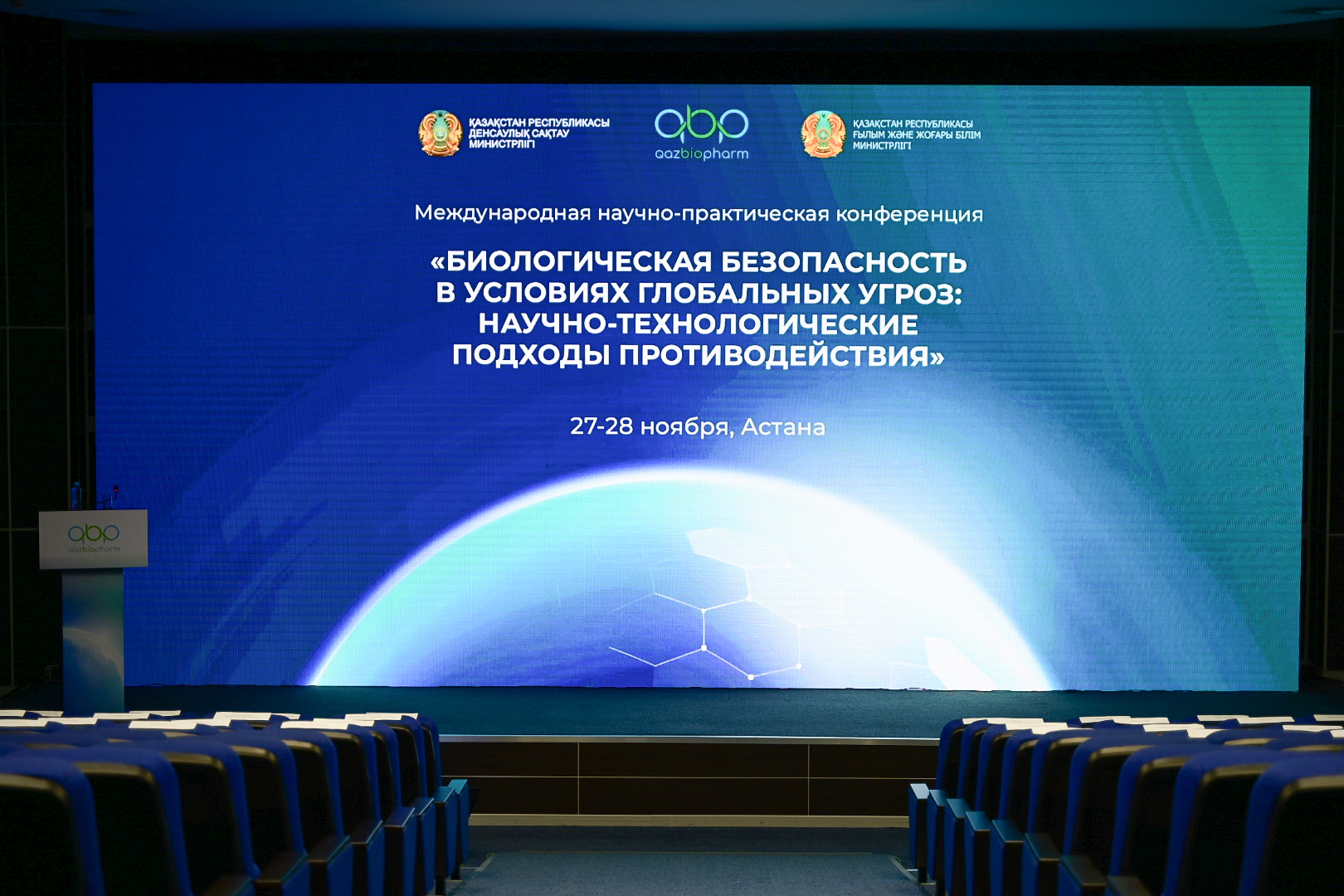
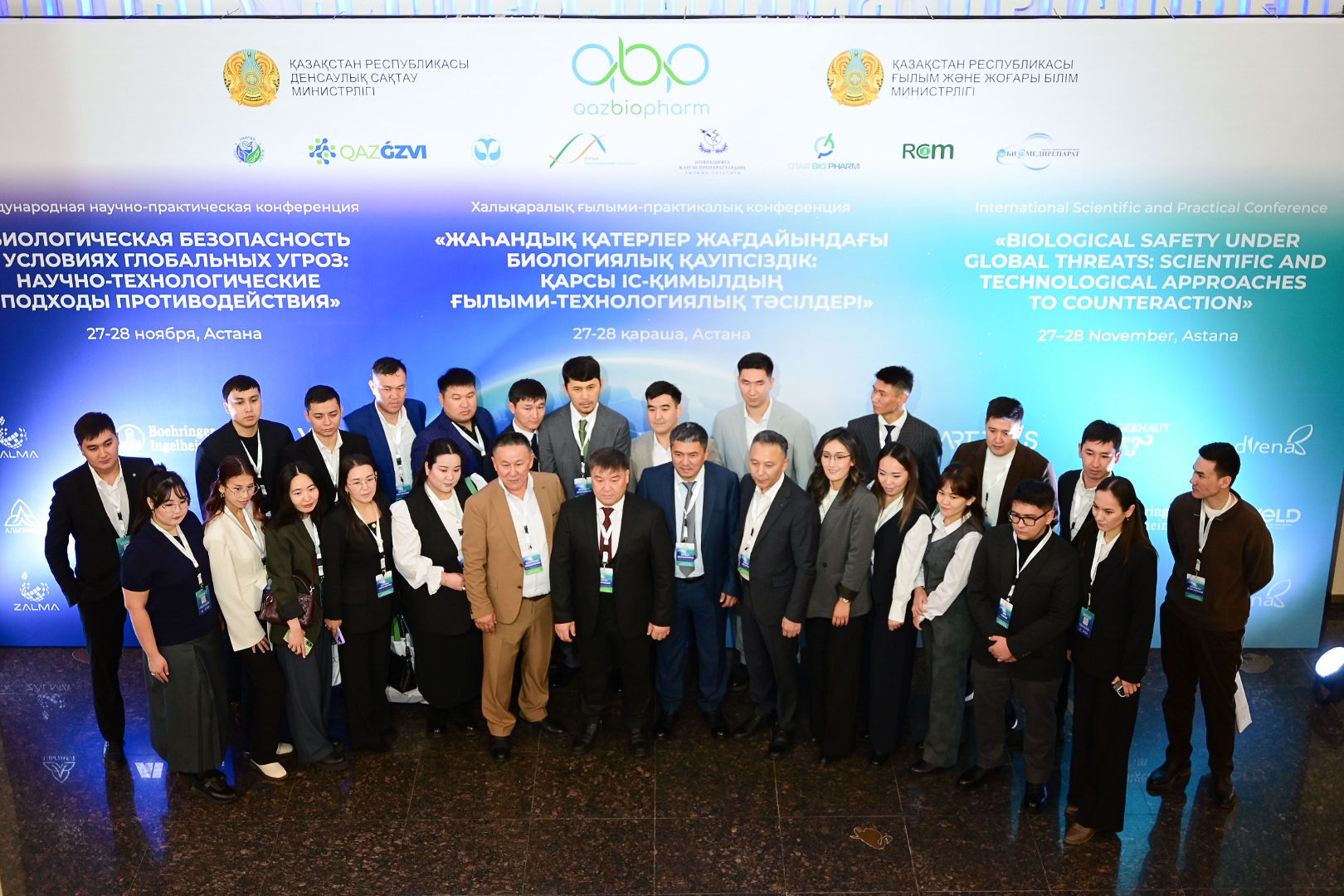
On November 27, the first day of the International Scientific and Practical Conference “Biological Safety Amid Global Threats: Scientific and Technological Approaches to Counteraction” was held at QazBioPharm National Holding JSC.
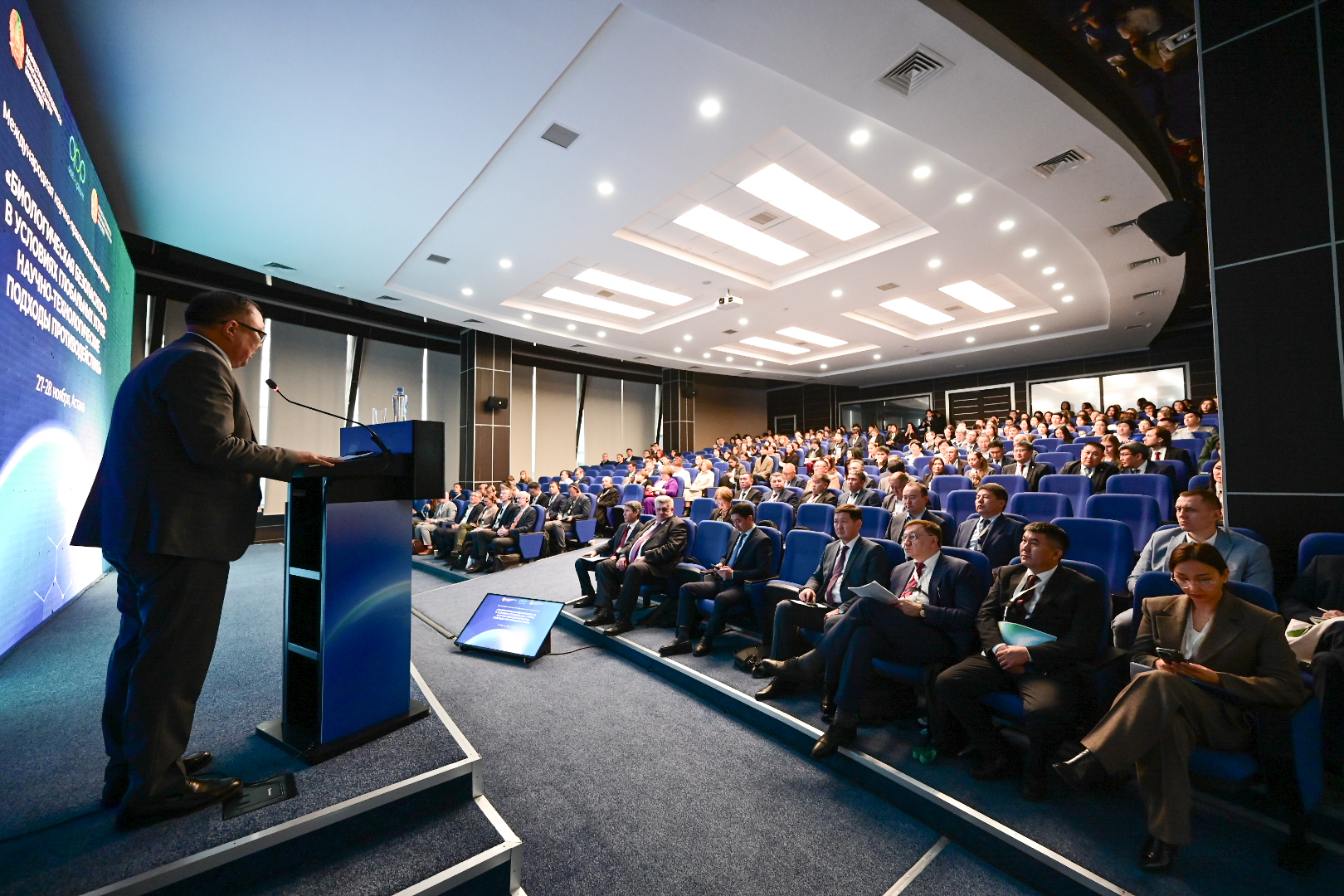
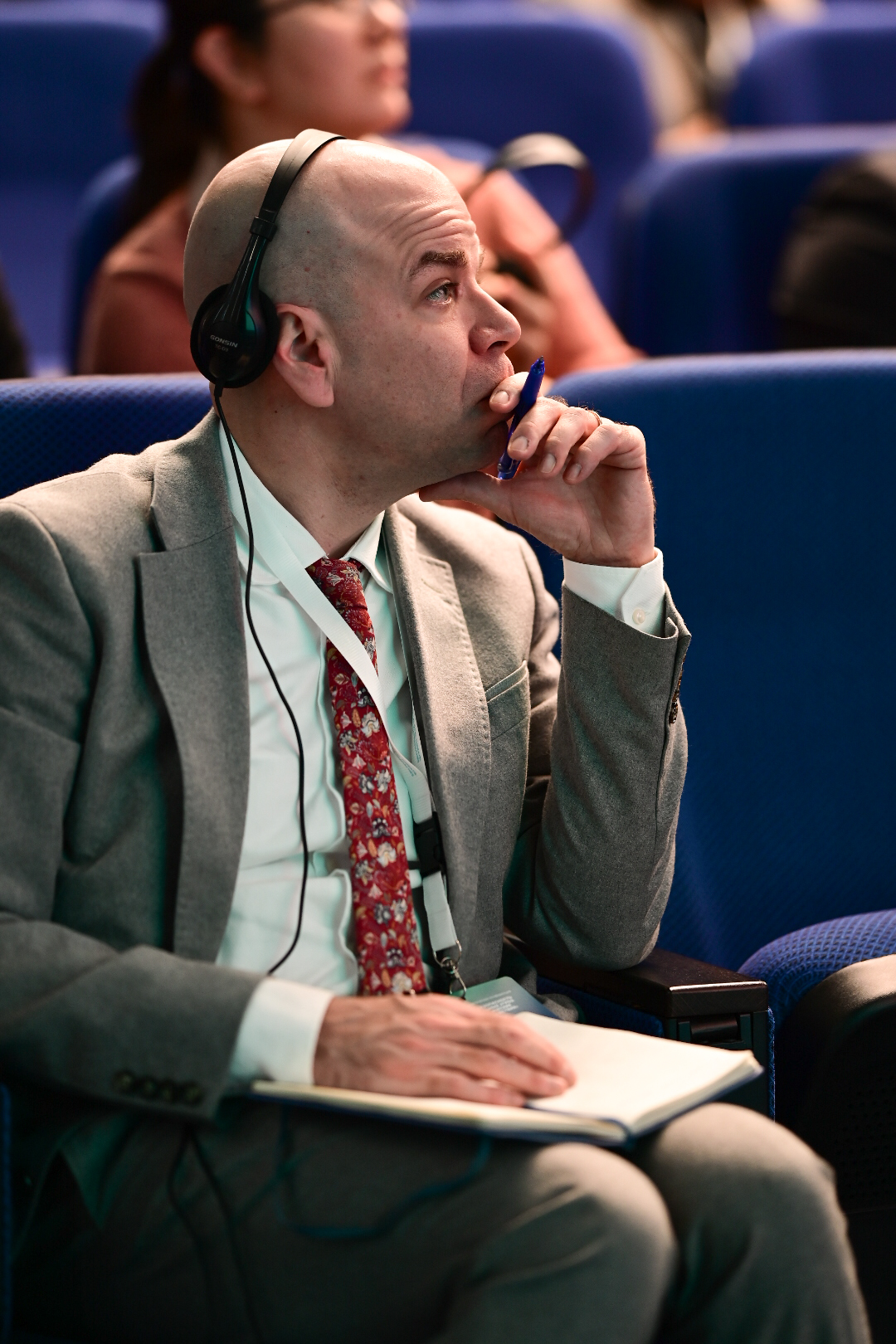
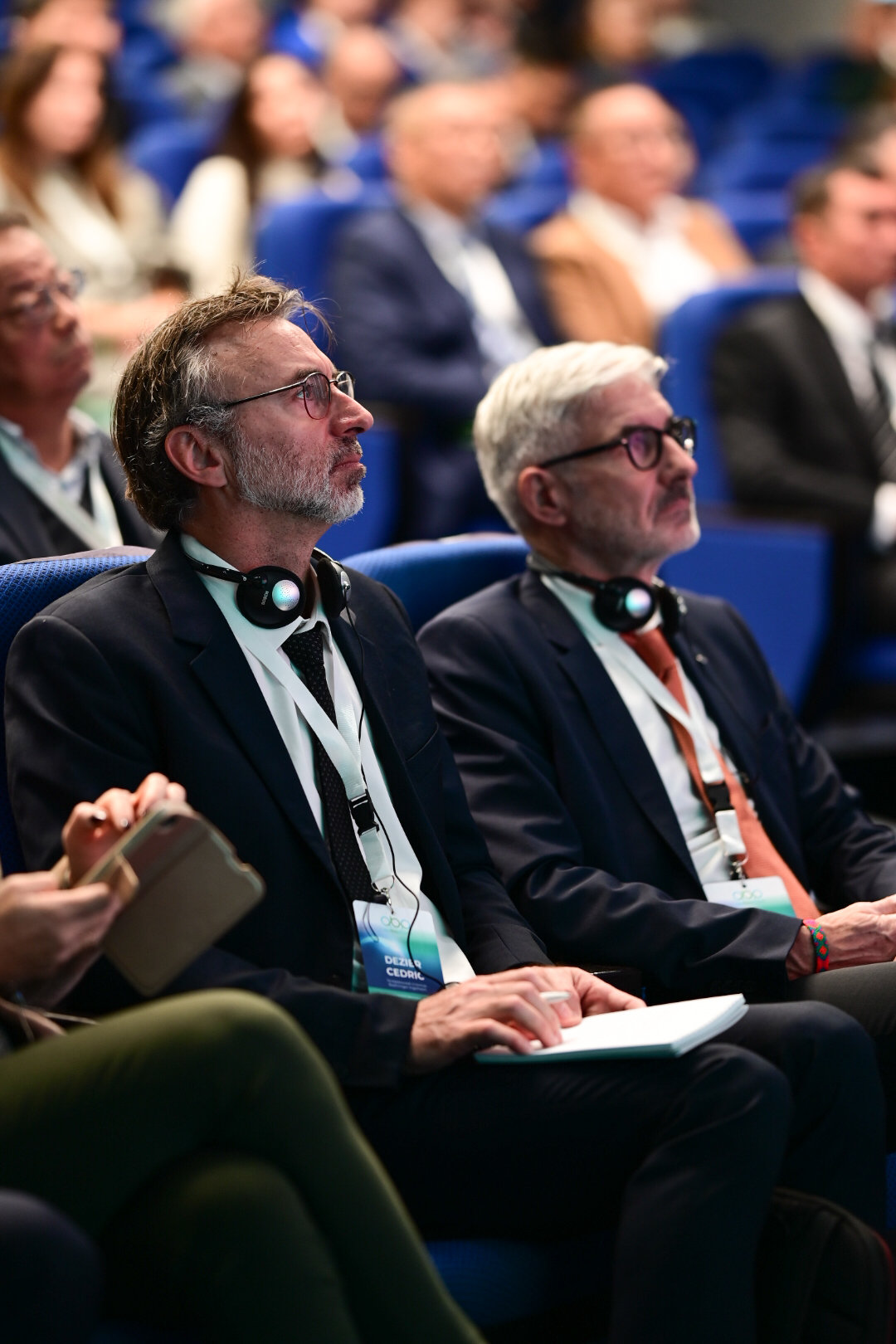
The conference brought together more than 300 participants, including representatives of government agencies, leading Kazakhstani and international scientists, specialists from academic institutions and research centers, as well as experts from France, China, and Russia.
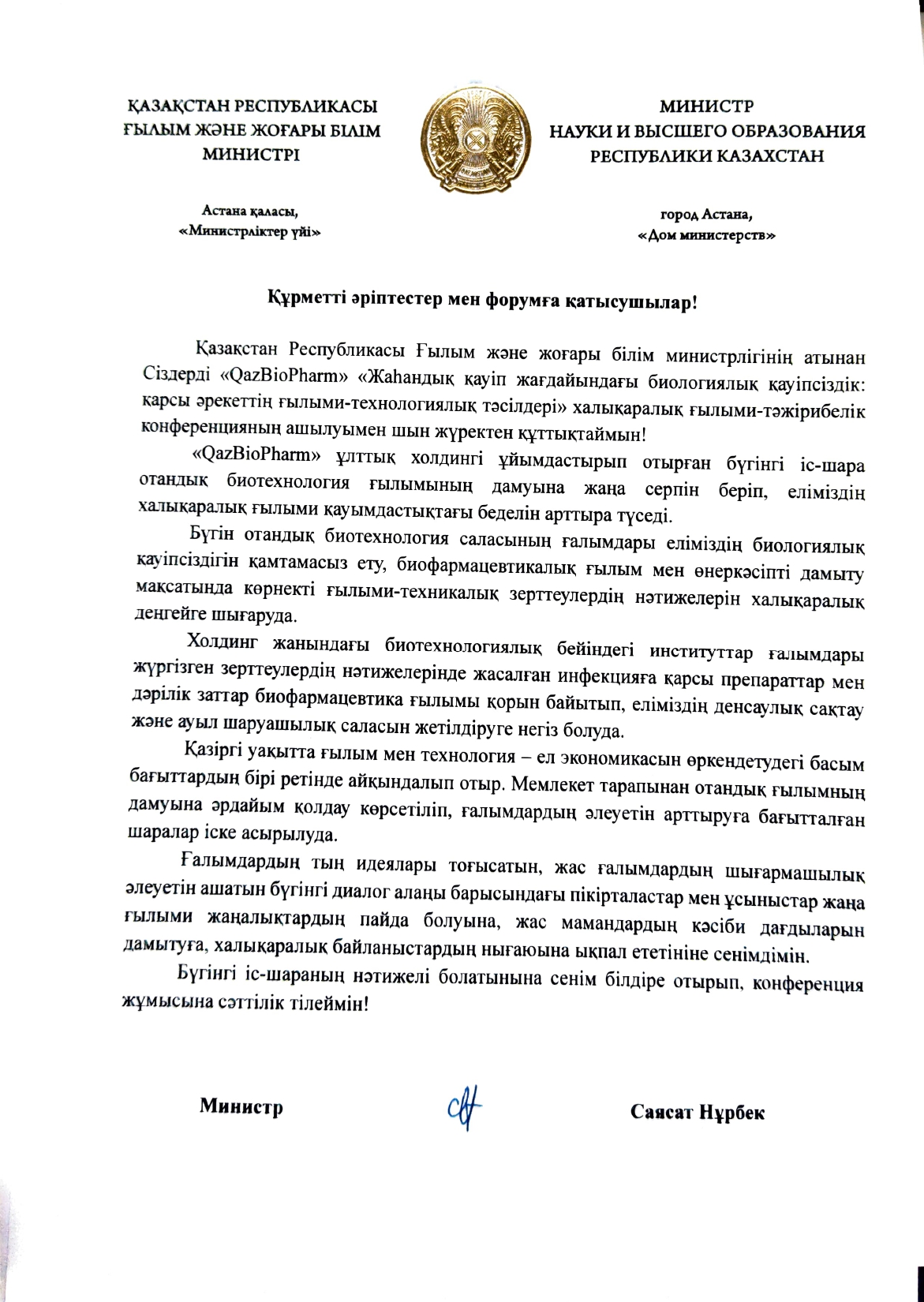
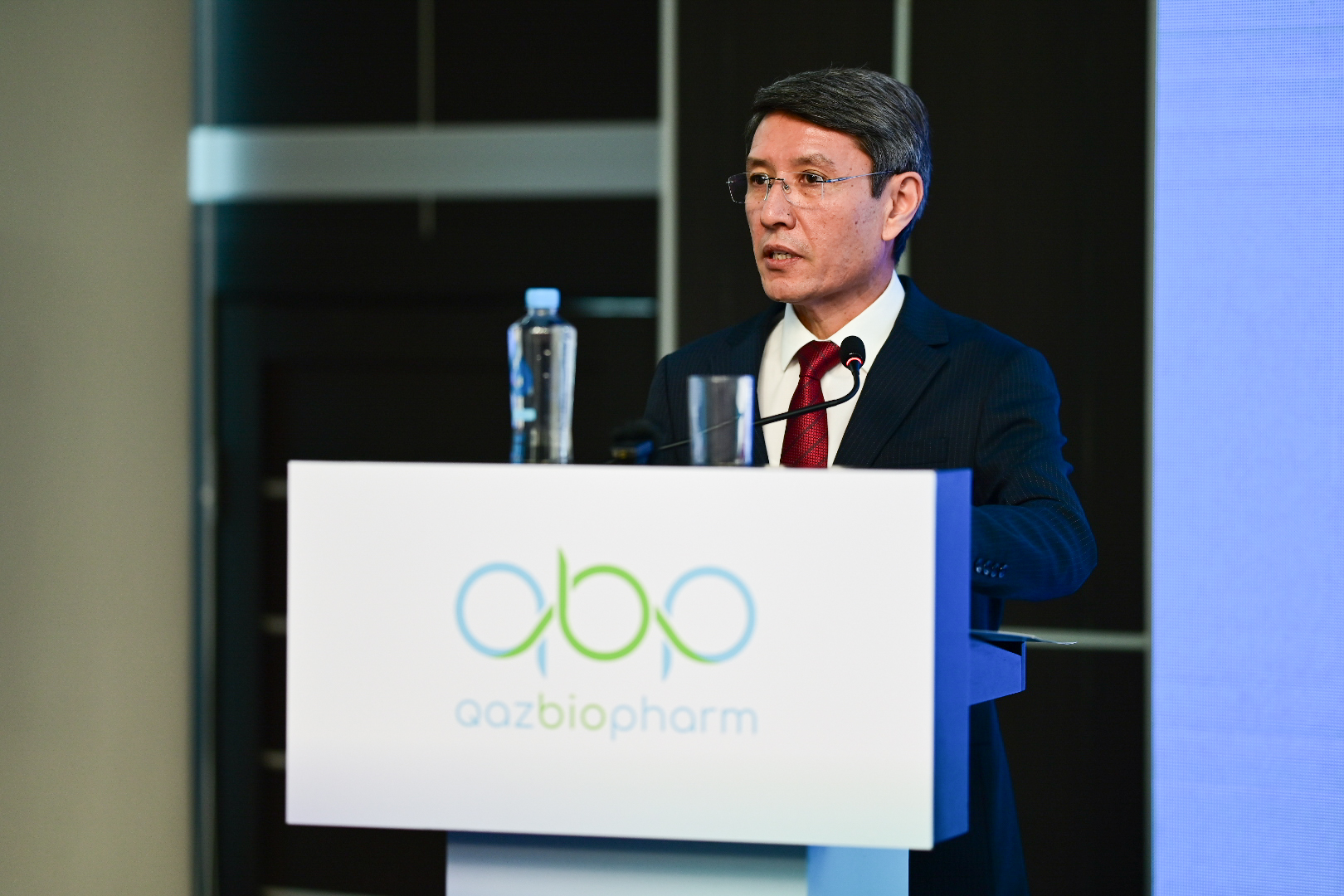
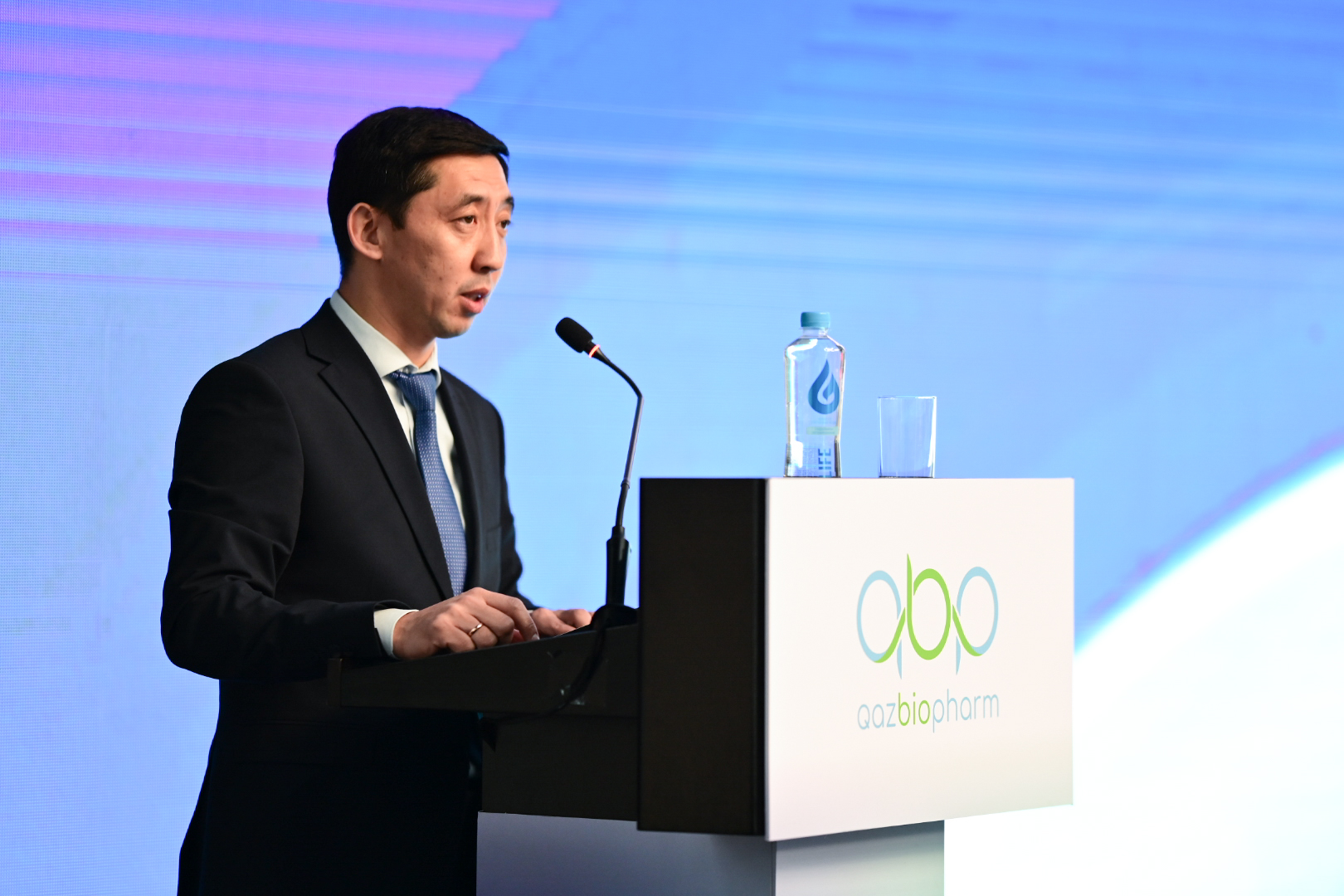
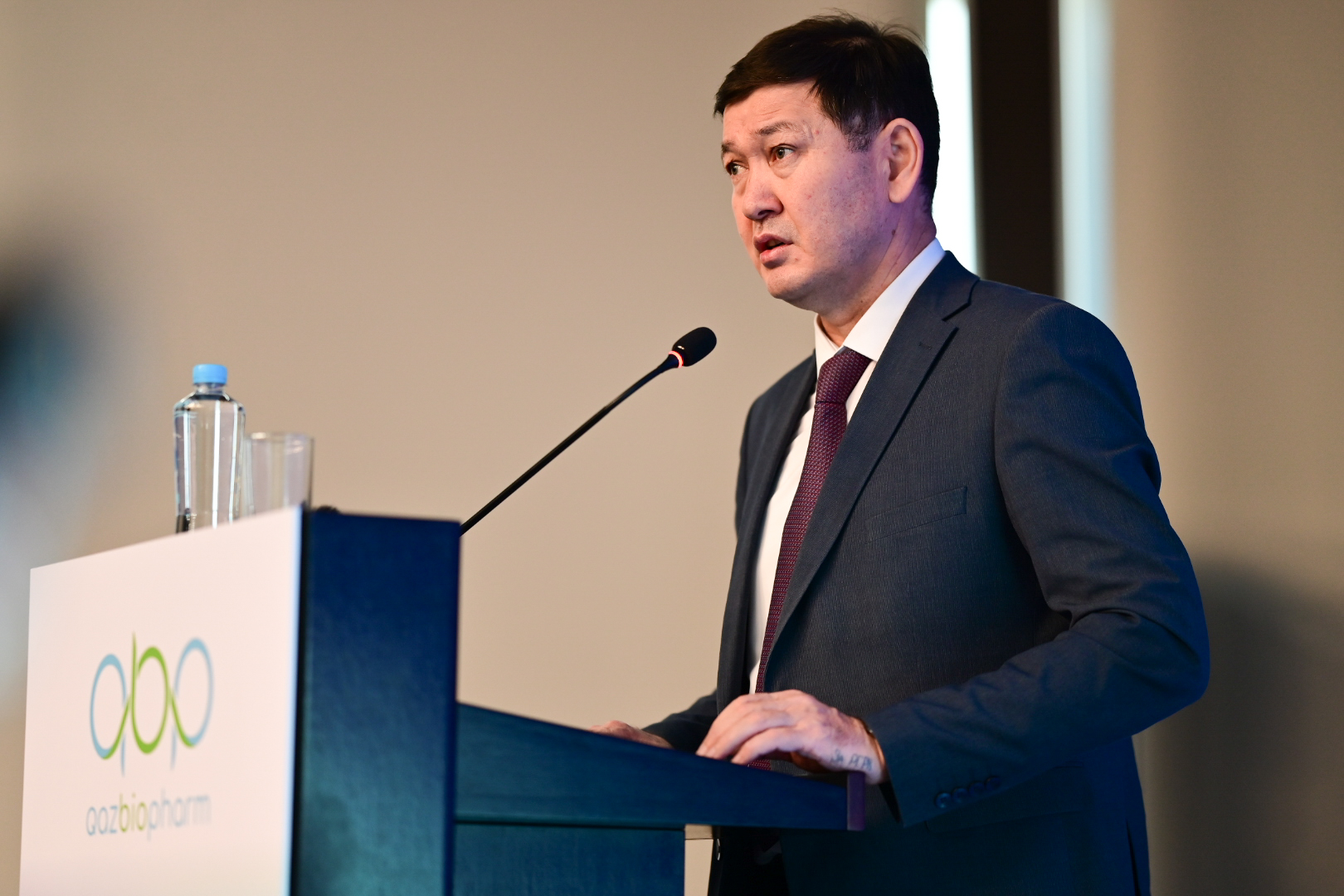
Welcome remarks were delivered by Nurkan Sadvakasov, Deputy Chairman of the Sanitary and Epidemiological Control Committee of the Ministry of Health of the Republic of Kazakhstan, and Zhaiyk Tokhtarov, Chairman of the Science Committee of the Ministry of Science and Higher Education, who conveyed congratulations from the Minister of Science and Higher Education.
Participants were also greeted via video message by Emmanuelle Soubeyran, Director General of the World Organisation for Animal Health (WOAH).

Ergali Abdurayimov, Director General of QazBioPharm National Holding, emphasized the importance of the conference as a platform for fostering scientific dialogue, exchanging research results, and advancing solutions critical to biological safety not only for Kazakhstan but for the global community as a whole.
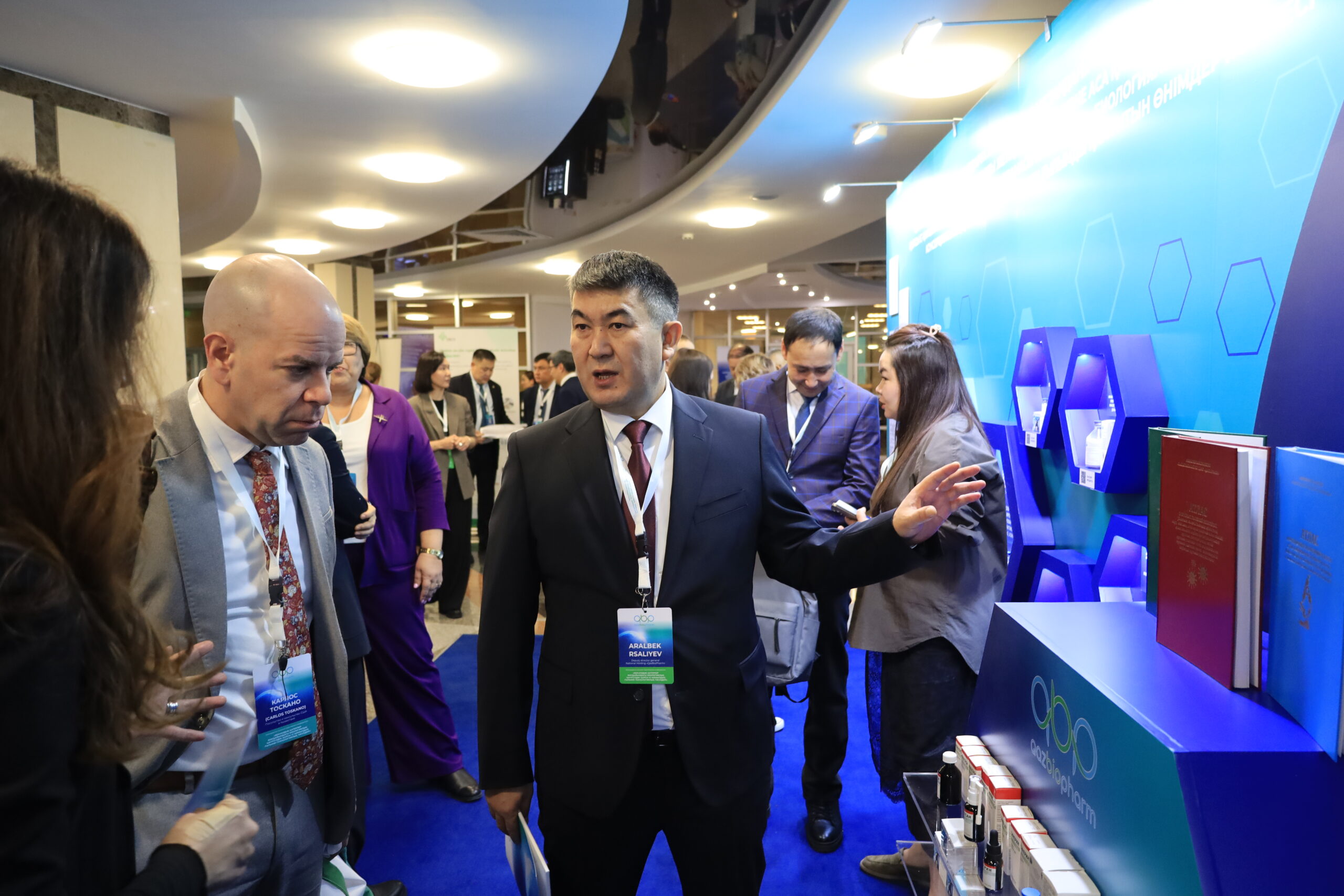
A presentation titled “Management and Coordination of the Megagrant ‘Improving Biological Safety Measures in Kazakhstan: Countering Dangerous and Highly Dangerous Infections’ for 2023–2025” was delivered by Aralbek Rsaliev, Deputy Director General for Science and Technology. He highlighted key achievements made within the framework of the program.
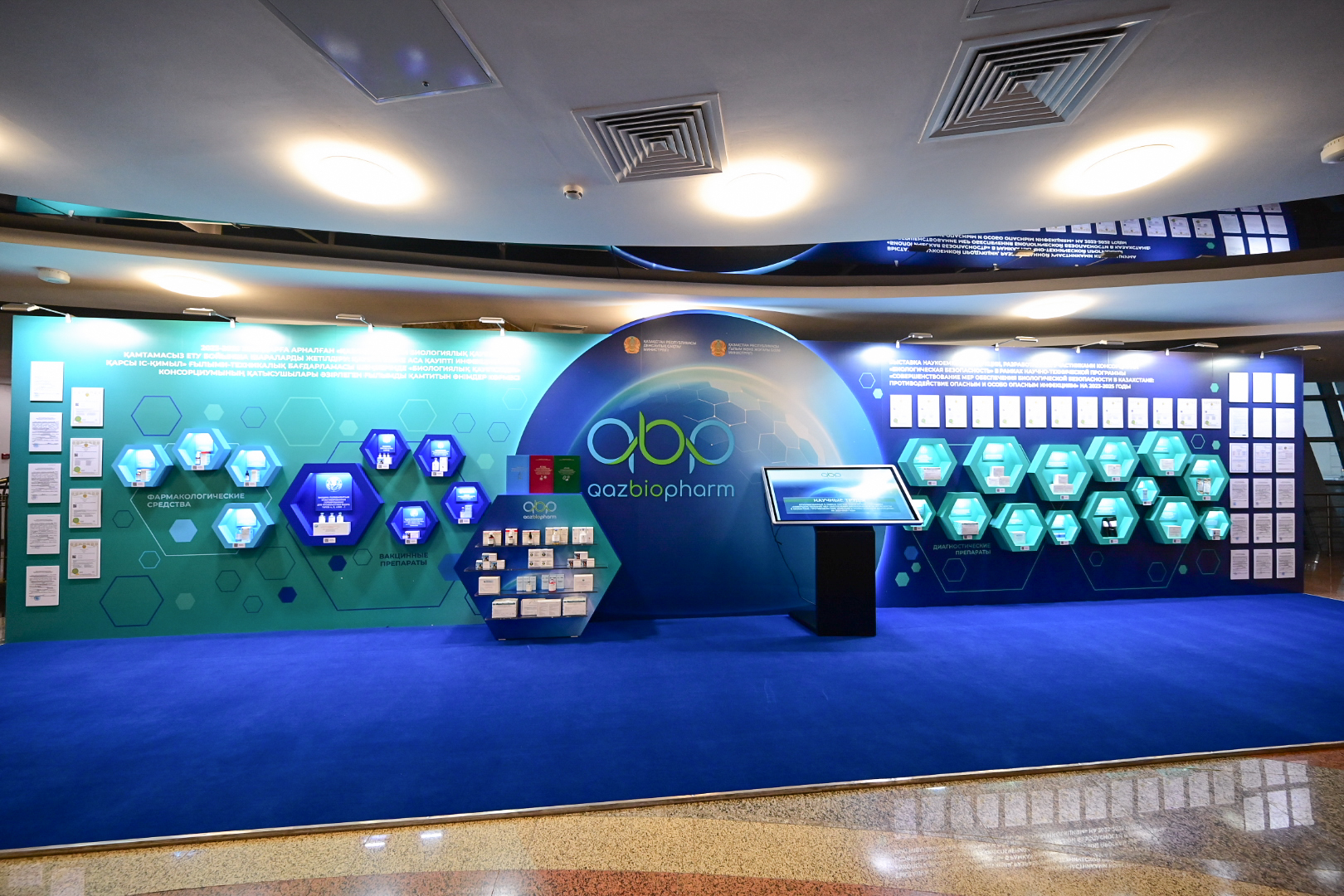
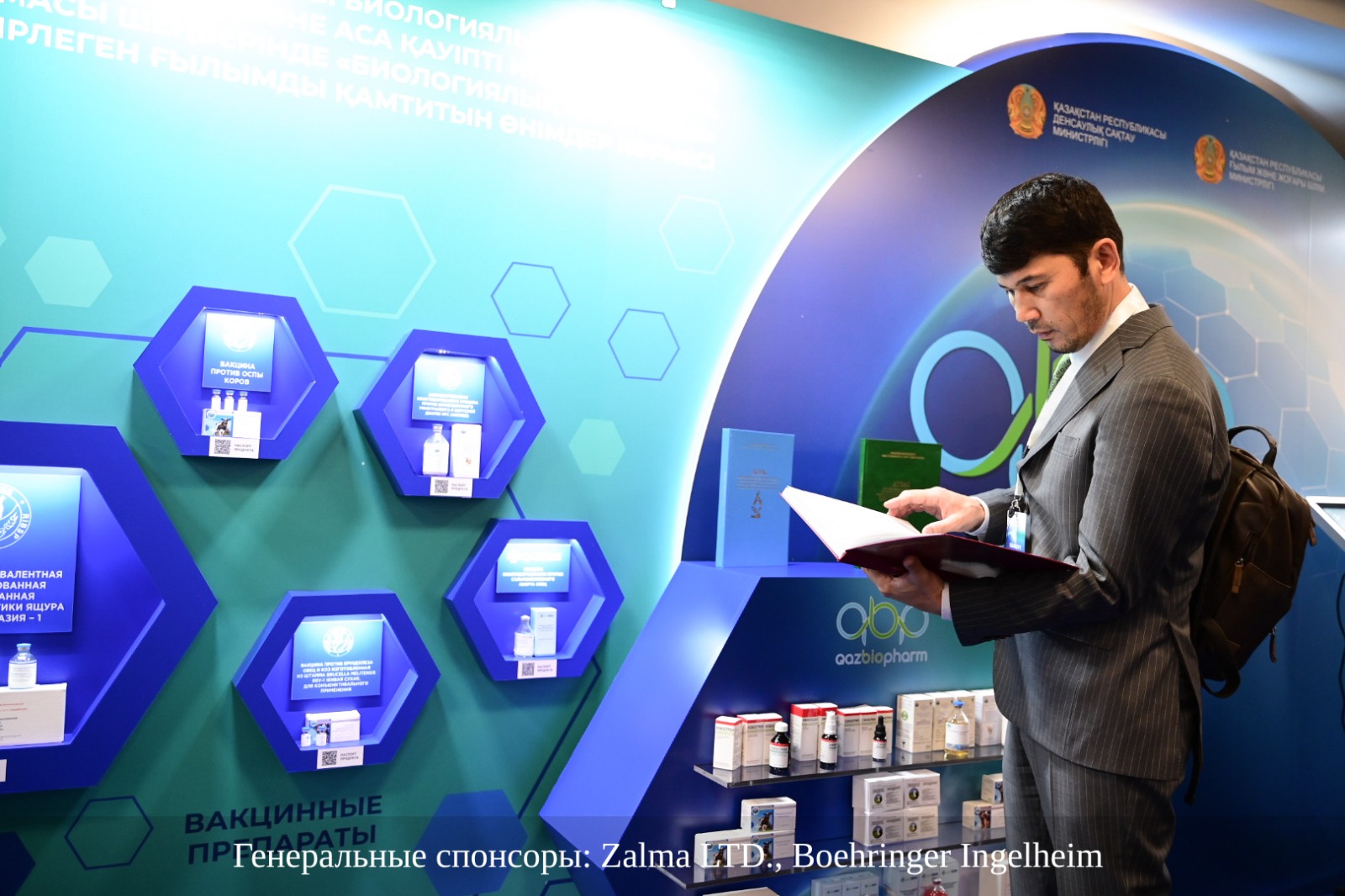
The conference also featured an exhibition of high-tech scientific products, where participants had the opportunity to explore the work and developments of researchers — including test systems, vaccine platforms, pharmaceuticals, and technological solutions for monitoring and preventing infectious diseases.
The conference proceeded in four thematic sections.
The first section focused on modern methods for monitoring epidemiological and epizootic situations, assessing internal and external sources of biological threats, and identifying approaches to the early detection of emerging risks.
The second section was dedicated to the development and improvement of diagnostic tools for detecting infectious agents. Specialists presented advanced methods for pathogen identification and technologies for increasing diagnostic sensitivity and accuracy.
The third section examined technological trends in the development of immunobiological products. Scientists shared research findings on next-generation vaccines and discussed opportunities for scaling up production technologies.
The fourth section addressed the issue of antimicrobial resistance. Experts analyzed trends in pathogen resistance, presented scientifically grounded approaches to mitigating it, and emphasized the need for comprehensive interagency cooperation.
The second day of the conference will take place tomorrow. The full program is available via the provided link.